

Two climbers sit side by side in a store: one molded plastic in primary colors, one natural wood. The plastic one is lighter and easier to carry home. The wooden one is heavier and looks like furniture. Which one is still being used three years from now? That is the question that decides whether a play purchase was a good one.
Quick verdict: for anything a child climbs, slides on or uses daily for years, wood usually wins on strength, lifespan and how well it fits a family room. Plastic wins on weight and easy outdoor cleanup. On safety, neither material wins automatically, because both must pass the same US federal rules. Build quality is what separates a safe product from a risky one.
Side by Side: Wood and Plastic
| Factor | Solid wood | Molded plastic |
|---|---|---|
| Typical weight limit | Often 100 to 220 lbs per child on quality climbers | Frequently lower and sized for young children |
| Typical lifespan | Many years with basic care | Often a few seasons, especially outdoors |
| Grows with your child | Higher limits and graded challenges carry into school age | Often outgrown sooner |
| Outdoors | Needs weather-resistant wood and resealing | Rinses clean; sun and cold can fade and crack it |
| Moving it around | Heavier | Light and portable |
| In a living room | Blends in with furniture | Stands out |
| Handing it down | Often lasts long enough for a younger sibling | Less likely to last that long |
What US Safety Law Actually Requires
Many parents assume wood is the safe choice and plastic the risky one. The law does not see it that way. Every children's product sold in the United States must meet the same requirements under the Consumer Product Safety Improvement Act, whatever it is made of:
- Lead limits apply to both the material and any paint or coating.
- Certain phthalates, chemicals used to make plastic flexible, are restricted in toys and child care products.
- Third-party testing is required, and the manufacturer must issue a Children's Product Certificate.
- Toys are also tested against ASTM F963, the US toy safety standard, which covers hazards like sharp edges, small parts and stability.
The practical takeaway: ask whether a product has been tested and certified, not just what it is made of. A reputable brand will tell you, and a listing with no safety information at all is a warning sign.
Weight Limits Predict How Long It Will Last
A weight limit is not just a safety number. It tells you how many years a piece of equipment can keep up with your child. A climber rated for a light toddler will be outgrown quickly. One rated for 200 pounds or more can serve the same child for years, and often a sibling after that.
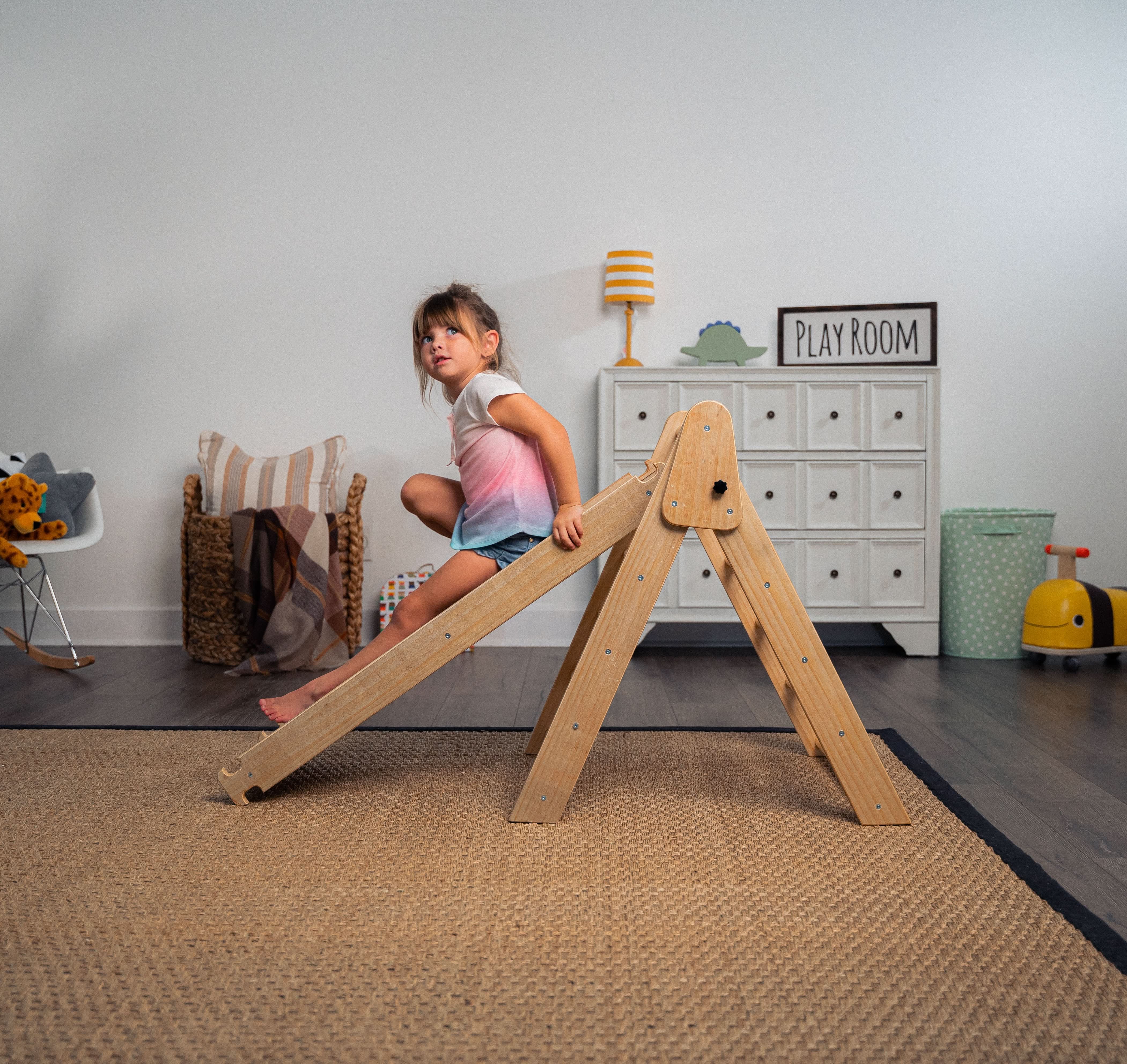
Solid wood's rigidity is why it can carry higher limits. Our Hazel Pikler set holds up to 220 pounds per child, and our Walnut Swedish ladder holds up to 220 pounds per person, enough for a parent to stretch on it too. When comparing any two products, check the weight limit and age range first.
Think in Years, Not Months
The best way to compare two products is to ask how many years each will realistically be used. Equipment that cracks, wobbles or is outgrown after a couple of seasons has to be replaced. Equipment rated for older, heavier children keeps working as your child grows, and graded designs, like climbers with higher rungs or add-on parts, keep offering a new challenge as skills develop. The option that serves your child for more years is usually the better choice.
Indoors or Outdoors? Each Material Wears Differently
Indoors
Inside, wood has the clear edge. It is stable, quiet underfoot and looks at home next to your furniture, which matters for equipment that lives in a family room. For smaller homes, foldable and wall mounted wooden designs like the Grove, which folds to 14 inches deep against the wall, take up little floor space.
Outdoors
Outside, the comparison is closer. Plastic needs no sealing and rinses clean, but years of sun and freezing temperatures can fade, warp and crack it. Wood outlasts plastic outdoors only when it is the right wood. Indoor pine is not built for rain and sun. Outdoor sets should use weather-resistant wood such as treated cedar with a protective sealant, plus a quick hardware check and reseal each season. Our guide to indoor vs. indoor/outdoor playsets explains the difference.
How Children Use Each One
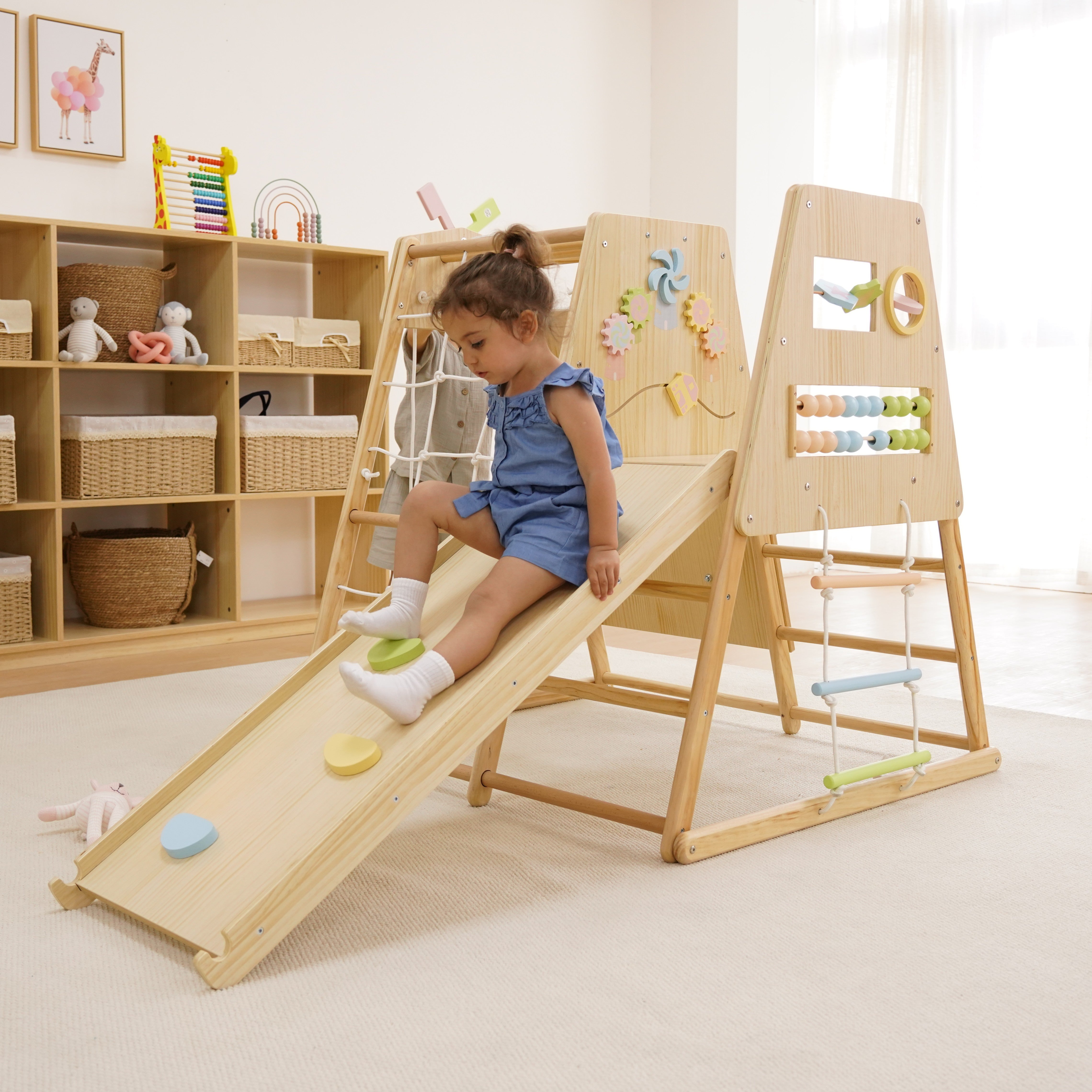
Equipment with fewer built-in features leaves more for a child to invent. A plain wooden triangle and ramp can be a mountain in the morning and a car ramp after lunch, while a toy built around one button or sound tends to be played with one way. For climbing equipment in particular, graded rungs and holds let children choose their own challenge, which is at the heart of the Montessori and Pikler approach to movement.
Red Flags to Watch for With Either Material
- No safety information anywhere on the listing: no testing, certification or standards mentioned.
- No weight limit or age range stated.
- Rough or unsealed wood, visible splinters or sharp corners.
- Thin plastic that flexes when an adult presses on a rung or platform.
- Strong chemical smells that do not fade after airing out.
- Wobble at full weight: a climber should not rock or shift when loaded.
- Indoor-only materials sold for outdoor use.
Where Plastic Is the Better Pick
Plastic earns its place for water and bath play, sandbox toys, lightweight pieces a small child carries around, and outdoor items you want to leave out and rinse off. If a toy will only be used for a single season, plastic can be the sensible choice. The case for wood is strongest for large equipment that children use daily over many years.
The Sustainability Question
Wood is renewable when it comes from responsibly managed forests. Look for FSC certification, which means the wood was sourced to Forest Stewardship Council standards. Longevity matters just as much: anything used for years and then handed down is better for the planet than something replaced each season, whatever it is made of.
Caring for Wooden Play Equipment
Wipe wooden pieces with a damp cloth and mild soap, and avoid soaking the wood or using harsh cleaners. Check bolts and fittings regularly. For outdoor sets, store or cover them during harsh weather and reseal the wood when it looks dry or faded.
Frequently Asked Questions
Is wood or plastic better for toddlers?
For climbers and play gyms used every day, wood is usually better: it is stiffer, often rated for more weight and lasts through the years a toddler becomes a confident climber. For water play and lightweight carry-around toys, plastic works well.
Do plastic and wooden toys have to meet the same safety standards?
Yes. In the US, all children's products must meet CPSIA requirements, including limits on lead and certain phthalates, and must be third-party tested and certified. Toys are also tested to ASTM F963.
How long does wooden play equipment last?
Well-made wooden equipment can last many years with basic care, often long enough to pass to a younger sibling. Check the weight limit and age range to estimate how long your child can use it.
Can wooden playsets stay outside?
Only those made for outdoor use, typically from treated cedar or another weather-resistant wood with a sealant. Store or cover them in harsh weather. Indoor pine sets should stay inside.
Is wooden play equipment worth it?
For equipment a child uses daily, usually yes. Higher weight limits and sturdier construction mean it stays useful for more years, and it can often be handed down when your child outgrows it.
Do wooden toys splinter?
Well-made wooden toys are sanded smooth and sealed, which prevents splinters. Check edges when the item arrives and periodically after, especially on outdoor pieces.
How do I check if a toy is safe?
Look for ASTM and CPSIA compliance, a stated age range and weight limit, smooth sealed edges, and a stable base. If a listing has no safety information, ask the brand before buying.
The Takeaway
Start with safety, then compare weight limits and how many years each option will be used. For everyday climbing and play equipment, that comparison usually points to wood. Browse our wooden indoor play equipment, or compare climbers by age in our climbers buying guide.