

The short answer: at least three hours a day. The World Health Organization recommends that children ages 1 to 4 spend at least 180 minutes a day in physical activity, spread throughout the day, and says more is better. That sounds like a lot until you see what counts. It doesn't mean three hours of running laps. It means three hours of moving: climbing, crawling, dancing, carrying, rolling and playing, in short bursts from morning to bedtime.
Here's how the numbers break down by age, what counts toward them, and how to reach them indoors on the days you can't get outside.
The Daily Numbers by Age
| Age | Daily activity | What that looks like |
|---|---|---|
| Under 1 | Several times a day, including at least 30 minutes of tummy time for babies not yet crawling | Floor play, reaching, rolling, crawling |
| 1 to 2 years | At least 180 minutes, at any intensity | Walking, climbing, pushing, pulling, dancing |
| 3 to 4 years | At least 180 minutes, with at least 60 of them energetic | Running, jumping, climbing, chasing games |
| 5 and older | U.S. guidelines call for active play throughout the day up to age 5, then at least 60 minutes of moderate to vigorous activity every day from age 6 | Sports, climbing, biking, active games |
"Energetic" means activity that makes a child breathe harder: running, jumping, climbing to the top, racing across the room. For a 3 or 4 year old, an hour of that, added up over the whole day, is the target.
What Counts, and What Doesn't
Almost any movement counts. A toddler climbing onto the couch, carrying a basket of blocks across the room or dancing in the kitchen is getting active minutes. Light activity like walking and playing on the floor counts toward the 180. Energetic play counts toward both numbers.
What doesn't count is time spent sitting still: in a car seat, stroller or high chair, or in front of a screen. The WHO guidelines specifically recommend limiting the time young children spend restrained for more than an hour at a stretch. For children under 2, they don't recommend screen time at all, and for ages 2 to 4, no more than an hour a day.
Why Short Bursts Work Best
Young children don't exercise the way adults do. They move in bursts of a few minutes, rest, and move again. That's normal, and it's why the guidelines say "spread throughout the day." Three hours is really dozens of short play sessions added together. Your job isn't to run a workout. It's to make movement the easy choice as often as possible.
A Sample 180-Minute Day Indoors
On a cold or rainy day, here's one way a 2 or 3 year old might reach three hours without leaving the house. The times are a guide, not a schedule.
| Time of day | Activity | Minutes |
|---|---|---|
| After breakfast | Free climbing on a Pikler triangle or jungle gym | 30 |
| Mid-morning | Helping with chores: carrying laundry, pushing a toy cart, wiping the table | 20 |
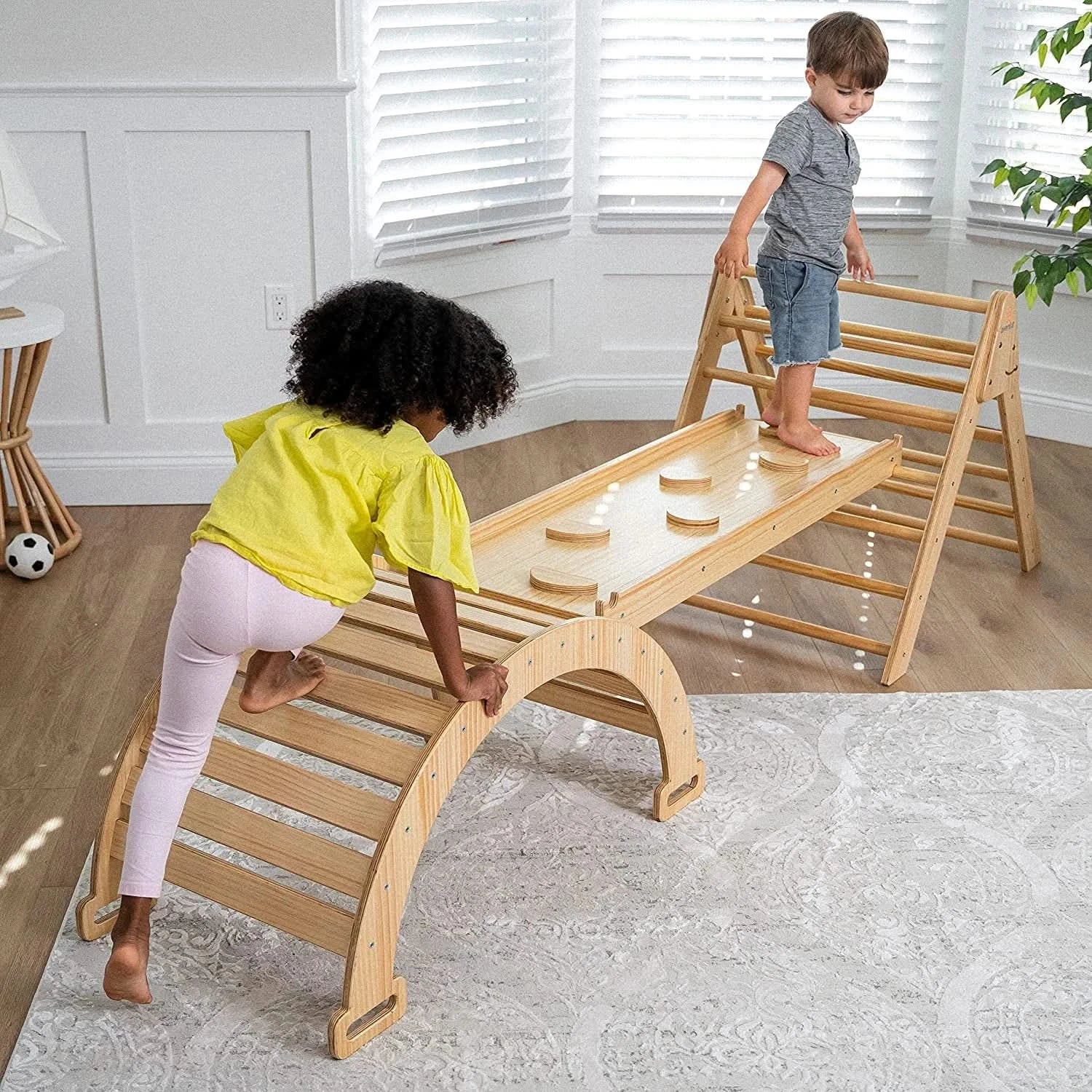
| Late morning | Obstacle course: balance beam, stepping stones, crawl under an arch | 30 |
| Before lunch | Dance party or follow the leader | 15 |
| Early afternoon | Floor play with blocks and pull toys | 30 |
| Late afternoon | Climbing, sliding and swinging | 30 |
| Before dinner | Hide and seek, animal walks, pillow crashing | 25 |
| Total | 180 |
The climbing and obstacle course blocks are where the energetic minutes come from, which matters most for 3 and 4 year olds who need at least an hour of it.
How to Make Movement the Default at Home
Keep something to climb out and ready. Children move more when the equipment is always set up. A Pikler triangle for younger toddlers or an indoor jungle gym for older ones turns ten spare minutes into active minutes, without a trip to the park.
Set up a course, then change it. A balance beam and stepping stones set can become a new course every morning. Our balance beams guide has six obstacle course layouts to start with.

Give them real jobs. Carrying, pushing and lifting count as activity, and toddlers love being useful.
Move with them. Children are more active when an adult joins in. Five minutes of chasing or dancing together often starts thirty minutes of play on their own.
Make space where you can. Even a small apartment can fit a climber. Our guide to making room for climbing in any space shows how, and a wall-mounted set like the Grove folds up to 14 inches deep when playtime is over.

What Active Play Builds
Those three hours aren't just about burning energy. Climbing, balancing, jumping and carrying are how young children build the gross motor skills every later activity depends on: coordination, balance, strength and body awareness. The WHO guidelines link active play in the first five years with healthy growth, better sleep and motor and cognitive development.
Quick Answers
Is 3 hours of activity a day too much for a toddler? No. It's the minimum the WHO recommends for ages 1 to 4, and it's spread across the whole day in short bursts, not done all at once.
Does playing outside count more than playing inside? Both count. Outdoor play has its own benefits, so get outside when you can, but indoor climbing and active games count toward the daily total too.
What if my child naps a lot or has a short day? Do what you can. The guidelines describe a goal, and every active minute helps. Some days will be lighter than others.
When should I talk to a doctor? If your child seems unusually tired, avoids movement, or isn't reaching motor milestones like walking or climbing stairs, mention it to your pediatrician.
Sources
World Health Organization. Guidelines on physical activity, sedentary behaviour and sleep for children under 5 years of age (2019).
U.S. Department of Health and Human Services. Physical Activity Guidelines for Americans, 2nd edition (2018).