

When it is too cold, wet or dark to play outside, toddlers still need to move. Without an outlet, that energy tends to end up on the sofa, the stairs and the kitchen chairs. The good news is that a toddler does not need a backyard to stay active. A little planning and the right setup make indoor movement easy every day.
The short answer: the World Health Organization recommends that children aged 1 to 4 spend at least 180 minutes a day in a variety of physical activities. Indoors, you can get there with simple games like obstacle courses, animal walks and dance breaks, plus a climber or slide that invites movement any time of day.
15 easy indoor activities for toddlers
None of these need special equipment. Clear a space, move anything breakable and stay close.
- Pillow obstacle course: Line up cushions, pillows and a blanket tunnel for crawling, climbing and stepping.
- Animal walks: Hop like a frog, waddle like a penguin, crawl like a bear. Great for strength and coordination.
- Dance and freeze: Play music and freeze when it stops. It builds listening skills and body control.
- Balloon keep-up: Keep a balloon off the floor using hands, feet or heads. Always supervise, since popped balloon pieces are a choking hazard.
- Tape balance beam: Stick painter's tape on the floor in lines and zigzags for balance walking.
- Laundry basket push: Toddlers push a basket of soft toys across the room, which is great for leg strength.
- Bubble chase: Blow bubbles and let toddlers pop them by jumping, clapping and stomping.
- Blanket fort crawl: Drape blankets over chairs for a tunnel to crawl through and hide in.
- Toddler yoga: Simple poses like tree, cat and downward dog, with animal sounds.
- Indoor scavenger hunt: Hide toys around one room and send them searching, bending and reaching.
- Beanbag toss: Throw beanbags or rolled socks into a basket for aim and coordination.
- Follow the leader: March, tiptoe, spin and jump, then let your toddler lead.
- Sock skating: On a smooth floor in socks, supervised and away from furniture edges.
- Stair practice: For confident walkers, supervised climbing up and down a few steps while holding a hand or rail.
- Sensory bin play: Scooping and pouring rice, beans or water works fine motor skills on quieter days. Supervise closely around small items.
Why indoor movement matters in winter
Toddlers are building the foundations of balance, coordination and strength through movement every day. Climbing, crawling, jumping and swinging develop gross motor skills and body awareness, and regular active play also supports better sleep, mood and focus.
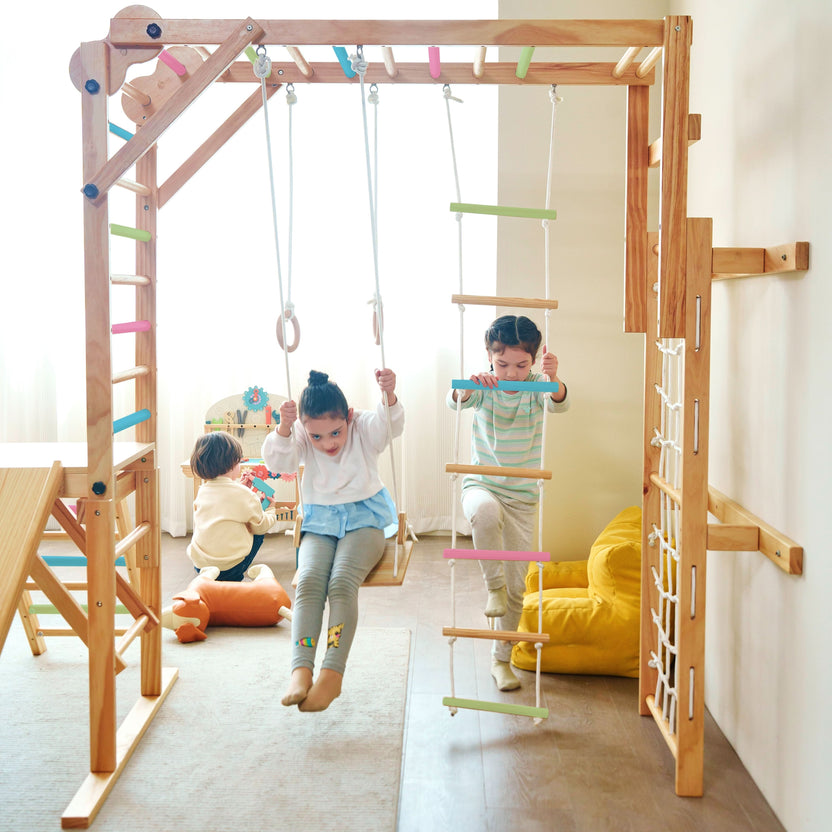
Winter often means more screen time and less movement. Having active options ready indoors, rather than waiting for a nice day, keeps movement part of the daily routine all season.
Make movement part of the room
Games are great, but they take energy to set up. The easiest way to keep toddlers active every day is to have something in the room that invites movement on its own, so a child can climb, slide or swing whenever the urge strikes.
For babies and young toddlers: a Pikler triangle
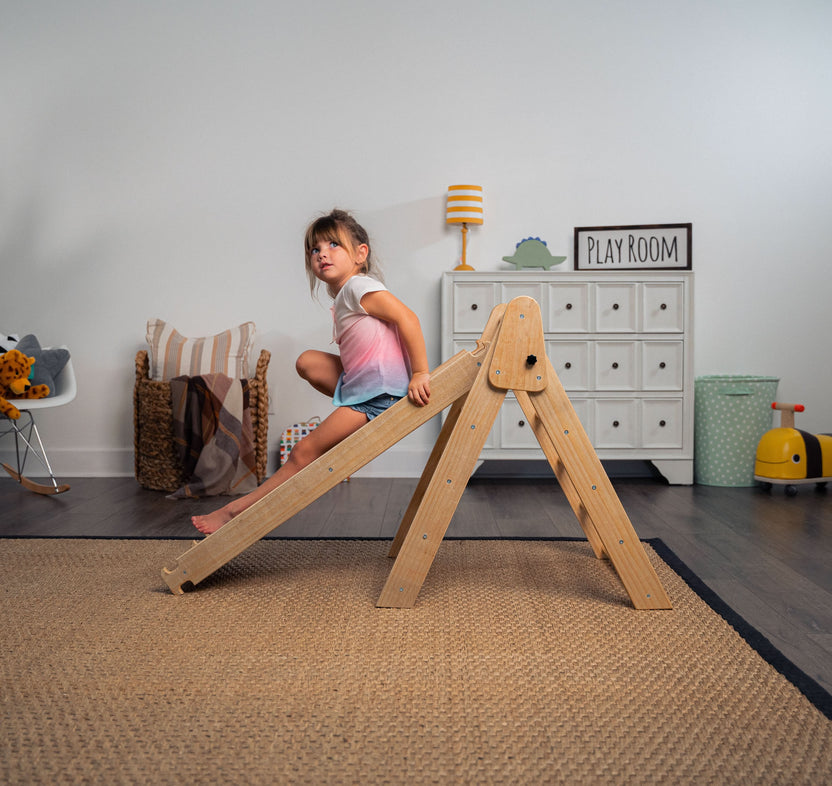
A Pikler triangle gives the youngest climbers a safe place to pull up, step and climb. The Avenlur Hazel 5-in-1 set adds a slide, ramp and rocker, and folds flat when you need the floor back.
For toddlers: a low climbing gym or indoor slide
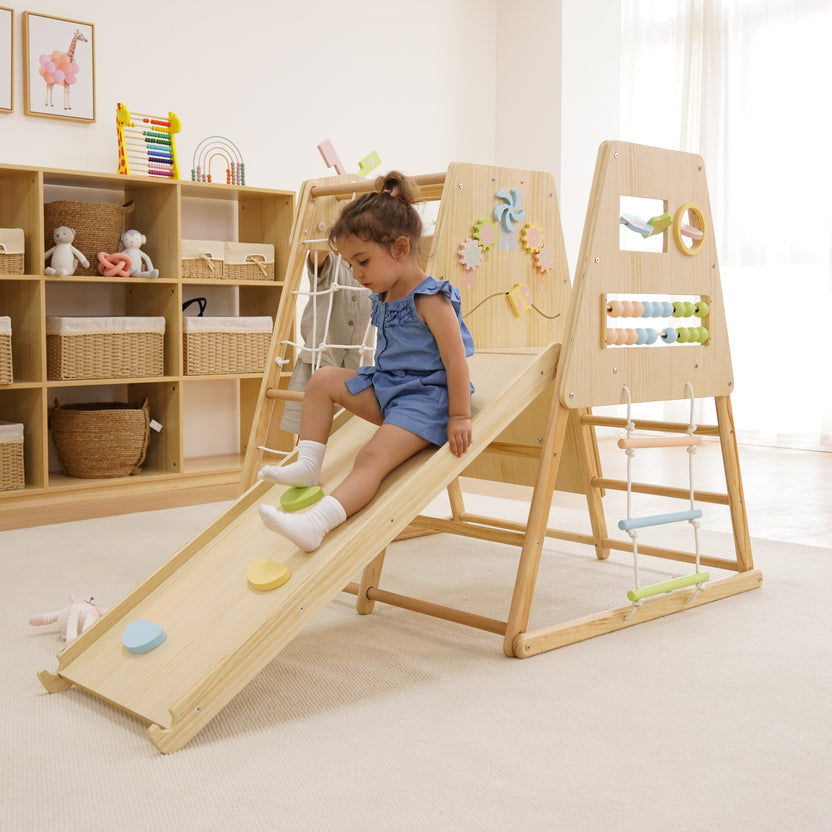
Once toddlers are steady on their feet, a low climbing gym gives them more routes and a slide to reward every climb. The Cherry 5-in-1 stays under four feet tall, and a foldable indoor slide like the Holland tucks away after play.
For preschoolers: an indoor jungle gym
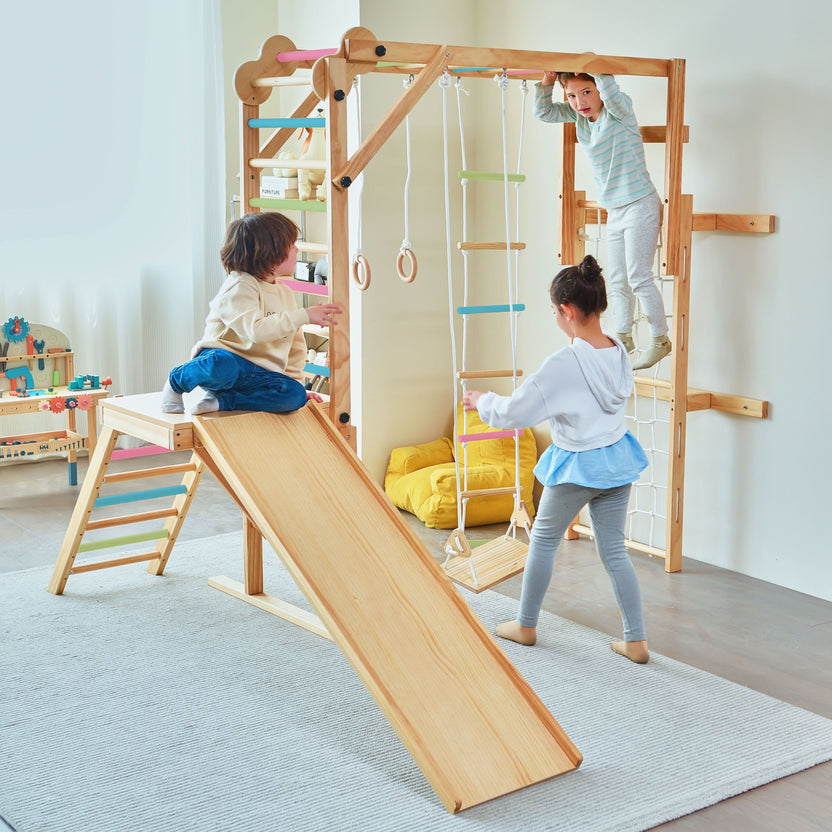
Older toddlers and preschoolers want height and challenge. An indoor jungle gym like the Magnolia combines monkey bars, a rock wall, a rope ladder, a slide and a swing in one frame, so there is always something new to try.
For small spaces: a wall gym
No playroom? A wall mounted climber takes almost no floor space. The Grove folds flat against the wall after play, and the Walnut Swedish ladder sits nearly flush and grows with your child for years.
Indoor play safety tips
- Clear a play zone away from sharp furniture corners, stairs and windows.
- Use a soft mat or rug under climbers and slides on hard floors.
- Bare feet or grippy socks are safer than slippery socks on climbers.
- Stay within reach, especially with new climbers and on anything off the floor.
- Check climbers, slides and swings regularly for loose bolts or wear.
Frequently asked questions
How much physical activity does a toddler need?
The World Health Organization recommends that children aged 1 to 4 spend at least 180 minutes a day in a variety of physical activities, spread throughout the day.
How can I keep my toddler active indoors?
Mix quick games like obstacle courses, dance breaks and animal walks with a climber, slide or swing that toddlers can use any time. Having movement built into the room makes daily activity much easier.
What are good indoor activities for a 2 year old?
Pillow obstacle courses, animal walks, bubble chasing, tape balance beams and a low climber or slide are all great for 2 year olds.
What is the best indoor climber for a toddler?
For young toddlers, a Pikler triangle set like the Hazel. For older toddlers, a low climbing gym like the Cherry or an indoor jungle gym like the Magnolia. See our climbers buying guide for more.
How do I keep a toddler active in a small apartment?
Choose movement games that need little space, like dance breaks and yoga, and consider a foldable or wall mounted climber that takes almost no floor space.
The bottom line
Winter does not have to mean restless toddlers. A few go-to games plus a climber, slide or swing in the room make it easy to keep little ones moving every day. Explore our full range of indoor play equipment to find the right fit for your home.